A PV Tracking System helps solar panels follow the sun across the sky. Unlike fixed-tilt arrays, it adjusts the panel angle during the day. This movement can capture more direct sunlight and improve energy production, especially on large, open sites. The result is not automatic perfection. Trackers also introduce motors, controllers, bearings, and maintenance requirements.
Dan Shugar, founder of NEXTracker and a widely recognized solar-tracking specialist, has described trackers as “the single biggest lever to reduce the levelized cost of energy.” His point reflects field experience. A well-designed system can increase yield, but its value depends on local conditions. Land shape, wind exposure, snow, soil quality, and electricity prices all matter. More energy does not always mean better project economics.
Inside a typical PV Tracking System, sensors or programmed algorithms estimate the sun’s position. A drive system then rotates rows of modules along one or two axes. The controller may also use backtracking, which reduces early-morning and late-afternoon shading between rows. On a windy day, the system can move panels into a safer position. Small details matter here.
Yet tracking is not a universal answer. Moving parts can fail. Poor alignment can reduce expected gains. Dust, uneven ground, and weak maintenance planning may quietly damage performance. A reliable evaluation should compare additional energy against equipment cost, service access, and long-term durability. That comparison is sometimes overlooked. This article explains how PV Tracking System technology works, where it performs best, and why careful design remains more important than impressive specifications.
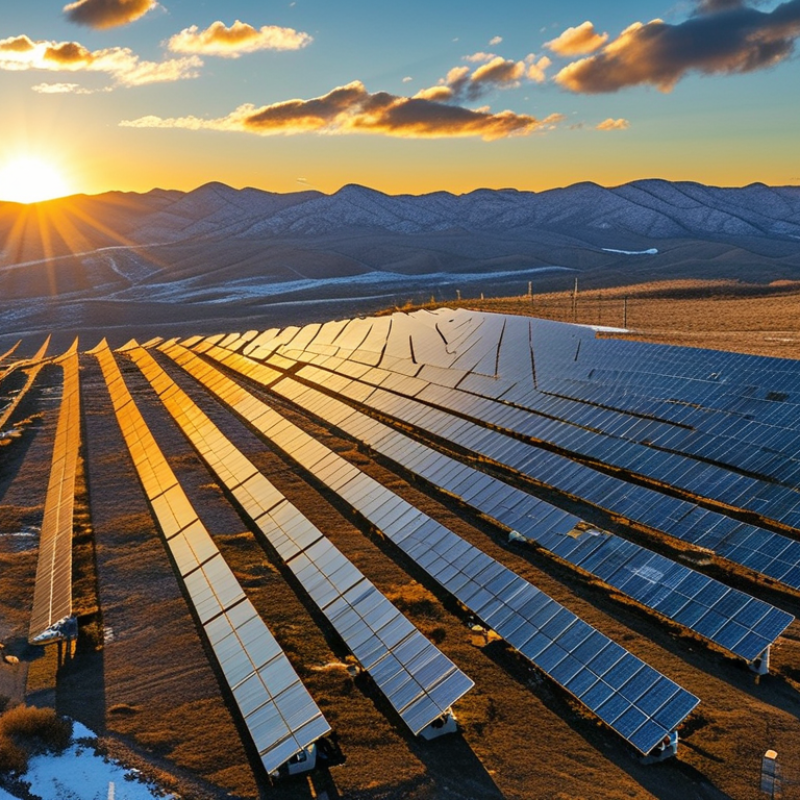
A PV tracking system is a mechanical structure that changes solar panel angles during the day. PV means photovoltaic, the process of converting sunlight into electricity. Unlike fixed-tilt arrays, trackers follow the sun’s apparent movement across the sky. This alignment can increase energy production, especially during morning and afternoon hours.
The main components include mounting frames, drive motors, gears, position sensors, and a control unit. Some systems rotate panels on one axis, while others use two-axis movement. Sensors may measure sunlight, but software often calculates the sun’s position more reliably. The controller sends movement commands, while motors adjust the rows gradually. Wind sensors can trigger a safe, nearly horizontal position during severe weather.
The purpose is not simply to produce more electricity. A tracker must balance energy gains against land conditions, maintenance, foundation work, and operating costs. On a flat site with strong sunlight, tracking may improve project output. On uneven ground, rocky soil, or a windy location, the added machinery can create practical problems. Field inspections often reveal small issues, such as cable tension, dust near moving joints, or uneven row movement. These details matter. A tracker is not automatically better. Its value depends on careful engineering, accurate site data, and regular maintenance. Even good models can underperform when installation tolerances are ignored.
A PV tracking system is a solar mounting structure that turns photovoltaic panels toward the sun. Fixed panels face one direction, but trackers adjust their angle throughout the day. This movement helps the panels receive stronger sunlight, especially during morning and late afternoon.
Most trackers use a control unit, position sensors, and electric motors. The controller calculates the sun’s position from time, date, location, and astronomical data. Some systems also compare light levels through sensors. A single-axis tracker rotates panels from east to west. A dual-axis tracker adds vertical movement, following seasonal changes in the sun’s height.
The process begins before sunrise, when the panels face east. They slowly rotate as the sun crosses the sky. At sunset, the system returns to its starting position. Wind sensors can trigger a safer, flatter position during strong weather. This protects the structure and reduces mechanical stress.
Tracking is not automatically better in every location. Motors consume some electricity, and moving parts need inspection. Dust, uneven ground, or poor alignment can reduce performance. A tracker may also lose the advantage under heavy clouds, when sunlight becomes diffuse. Engineers must compare extra energy production with installation, maintenance, and storm risks. The sun follows a reliable path, but real sites remain imperfect. That is where careful design matters.
What Is a PV Tracking System and How Does It Work?
A PV tracking system changes the panel’s angle as the sun crosses the sky. Its process begins with sunlight detection. Pyranometers, light sensors, or programmed solar-position algorithms estimate the sun’s azimuth and elevation. A controller compares that position with the panel’s current angle. Encoders then report the real movement. Small motors drive gearboxes, moving rows along one or two axes. The goal is simple: keep sunlight closer to the panel’s perpendicular surface. NREL guidance indicates that single-axis tracking can increase annual energy yield by roughly 15–25% versus fixed-tilt arrays, depending on location, row spacing, and weather.
The movement is continuous, but rarely fast. A utility array may adjust in small steps every few minutes. At night, the controller resets the rows for the next sunrise. Strong wind changes the process. An anemometer can trigger a stow position, reducing mechanical stress. IEA PVPS reported more than 400 GW of new photovoltaic capacity worldwide in 2023, making reliable tracking control increasingly important for large projects. Still, the system is not perfectly clever. Dust, shadows, sensor drift, or a loose encoder can create inaccurate movements. A clear algorithm may still produce poor output. Operators must compare expected and measured power, inspect motors, and recalibrate sensors. In practice, the best angle is not always the mathematically ideal one. Clouds, terrain, maintenance access, and land constraints complicate the decision.
| Operating Stage | Main Input or Component | How It Works | Typical Data or Range | System Output |
|---|---|---|---|---|
| 1. Sunlight Availability Check | Light sensors, irradiance sensor, or astronomical calculation | The controller determines whether there is enough daylight for tracking. Some systems use direct light sensing, while others calculate the sun’s position from time, date, and geographic coordinates. | A site-configured start threshold is often approximately 50–200 W/m² when irradiance measurement is used. | Tracking enabled, standby mode, or night mode |
| 2. Sun Position Calculation | Controller, real-time clock, latitude, longitude, date, and time | The control algorithm calculates the solar azimuth and elevation for the site. This allows the tracker to follow the sun even when sensor readings are affected by clouds or shading. | The sun appears to move across the sky at approximately 15° per hour because of Earth’s rotation. | Target panel angle and movement direction |
| 3. Position Error Detection | Angle encoder, inclinometer, limit switch, or position feedback sensor | The controller compares the target angle with the actual tracker position. The difference is used to determine whether the structure must move. | Typical tracking accuracy is approximately 0.5°–2°, depending on system design and operating conditions. | Corrective movement command or hold position |
| 4. Movement Command | Motor drive, actuator, gearbox, and controller | When the angular error exceeds the programmed deadband, the controller powers the actuator to rotate the photovoltaic array toward the calculated solar position. | Movement is usually intermittent rather than continuous; the interval may be configured from seconds to several minutes. | Motor rotation in the required direction |
| 5. Panel Angle Adjustment | Mechanical frame and tracker axis | The mounting structure changes the module orientation so that sunlight strikes the module surface more directly, increasing the usable plane-of-array irradiance. | Single-axis trackers commonly rotate through roughly ±45° to ±60° around one axis. Dual-axis trackers control both azimuth and elevation. | Improved solar incidence angle |
| 6. Position Confirmation | Encoder feedback, limit switches, and motor-current monitoring | The system verifies that the commanded position has been reached. If movement is blocked or the position is outside the permitted range, the controller can stop the motor and generate an alarm. | Position limits are defined during commissioning to prevent mechanical over-travel. | Confirmed position, warning, or fault status |
| 7. Continuous Tracking Loop | Control software and repeated sensor or calculated-position data | The controller repeatedly updates the target position as the sun moves. A deadband prevents unnecessary motor activity caused by small fluctuations or sensor noise. | A deadband of approximately 0.1°–1° may be used, depending on the mechanical accuracy and control strategy. | Stable alignment with controlled energy consumption |
| 8. Cloud and Low-Light Response | Irradiance measurement and tracking logic | During heavy cloud cover, the system may continue using the calculated sun position, pause movement, or switch to a predefined operating mode to avoid excessive actuator activity. | The response depends on the irradiance threshold, time delay, and control settings selected during commissioning. | Reduced unnecessary movement and improved control stability |
| 9. Wind Protection | Anemometer, weather station, or wind alarm input | When wind speed reaches a programmed protection level, the tracker moves to a low-load stow position. The exact setting is determined by structural design and local wind conditions. | Many systems use a configured stow threshold in the approximate range of 15–25 m/s; the actual value is site-specific. | Protective stow position and safety lockout |
| 10. Nighttime Return | Astronomical clock or low-light detection | After sunset, the tracker stops normal solar tracking and moves to a programmed overnight position, often selected to reduce wind exposure or prepare for the next morning. | The nighttime position is commonly horizontal or another predefined low-load orientation. | Overnight standby and next-day start readiness |
| 11. Electrical Energy Benefit | PV output monitoring and comparison with a fixed-tilt baseline | By maintaining a more favorable angle to the sun for more hours, a tracker can increase annual energy yield. The result depends on latitude, weather, terrain, row spacing, backtracking, and system losses. | Single-axis tracking may provide roughly 15%–25% more annual energy than fixed-tilt systems; project-specific results vary. | Higher annual electricity production potential |
| 12. Monitoring and Maintenance | Data logger, supervisory software, alarms, and inspection records | Operating data such as position, motor status, wind events, faults, and energy production are recorded to identify abnormal behavior and support preventive maintenance. | Common inspection items include fasteners, bearings, gearboxes, actuators, wiring, sensors, and communication connections. | Operational visibility, fault detection, and improved system availability |
Note: Numerical ranges are typical engineering reference values. Final settings must be selected according to the tracker design, structural calculations, local climate, site conditions, and applicable safety requirements.
What Is a PV Tracking System and How Does It Work?
A PV tracking system moves solar modules to follow the sun’s apparent path. Motors, controllers, and position sensors coordinate this movement. Compared with fixed-tilt arrays, trackers can receive stronger sunlight during more hours. Their value depends on local weather, land shape, and maintenance access.
Types of PV Tracking Systems and Their Structural Differences
Fixed-tilt systems use stationary frames with a set angle. They have fewer moving parts and simpler foundations. Single-axis trackers rotate modules along one axis, usually east to west. A long torque tube supports multiple panels in each row. Bearings and drive units connect the rows, so alignment matters. Vertical-axis trackers rotate around a near-vertical post and suit some high-latitude layouts. Dual-axis trackers add a second rotation point. Their frames can adjust both elevation and azimuth, but they need stronger drives, wider clearances, and more careful wind protection. The structure is more complicated.
Tips: Check wind loads, soil strength, drainage, and row spacing before selecting a tracker. Keep service paths visible. A small shading study can prevent costly layout changes.
From practical design work, I would not treat maximum energy yield as the only target. Moving parts require inspections, lubrication plans, and replacement access. Dust, uneven foundations, or software errors can reduce output. No design is perfect. A slightly simpler structure may perform more reliably over time, especially where technicians and spare parts are limited.
Typical annual energy yield compared with a fixed-tilt photovoltaic system
PV tracking systems use motors, sensors, and control software to change the orientation of solar modules during the day. A fixed-tilt system has no moving axis, a single-axis tracker rotates around one axis, and a dual-axis tracker follows both the sun’s daily and seasonal position.
The ranges shown are representative engineering values for annual energy yield relative to a fixed-tilt system rated at 100. Actual results depend on latitude, climate, terrain, row spacing, shading, and system design.
A photovoltaic tracking system moves solar modules toward the sun. Its controller uses astronomical algorithms, light sensors, or both. Motors then adjust the array’s angle during the day. Single-axis trackers rotate from east to west. Dual-axis trackers also change tilt. The goal is simple: reduce the angle between sunlight and the module surface.
The gain can be meaningful. NREL’s 2024 Annual Technology Baseline models single-axis tracking as a major utility-scale option, especially in high-irradiance regions. Real projects often report 15% to 25% more annual energy than fixed-tilt arrays, depending on weather, latitude, and layout. IEA PVPS Trends 2024 recorded about 456 GW of new solar capacity worldwide in 2023. That scale makes small design choices financially important. More energy is not automatically better.
Trackers need motors, foundations, control systems, and maintenance access. Their added steel and moving parts increase capital and operating costs. Wind can require protective stow positions. Uneven land, snow, and weak grid access can reduce their value. Dual-axis designs may deliver higher geometric accuracy, but they are often harder to justify economically. Utility-scale plants on open, sunny land are the clearest application. Rooftops usually favor fixed systems because space, shading, and structural limits matter more. I would not call tracking universally superior. A careful site model should compare energy gain, land use, maintenance, and financing assumptions before procurement.
: It is a mounting structure that turns photovoltaic panels toward the sun. Fixed panels usually face one direction. Trackers move.
A controller uses time, date, location, and astronomical data. Light sensors may provide extra guidance. Electric motors adjust the panels.
It rotates panels from east to west during the day. This movement follows the sun’s horizontal path.
It rotates east to west and changes the panel tilt. This follows seasonal changes in the sun’s height.
Panels normally face east before sunrise. They turn gradually during daylight. At sunset, they return to their starting position.
Many projects report 15% to 25% more annual energy than fixed panels. Results depend on weather, latitude, shading, and layout.
Not always. Cloudy conditions reduce its advantage because diffuse light has no clear direction.
Dust, uneven ground, poor alignment, snow, and shading can lower output. Real sites are rarely perfect.
Motors, sensors, foundations, and moving joints need inspection. Maintenance access must be planned. Small failures can affect many panels.
Open, sunny utility-scale sites are usually the strongest candidates. Rooftops often favor fixed systems because space and structure are limited.
A PV Tracking System is a solar power structure designed to improve energy production by adjusting the position of photovoltaic panels as the sun moves across the sky. Unlike fixed installations, it uses mechanical supports, motors, sensors, and control software to keep the panels oriented toward stronger sunlight. The system typically detects the sun’s position or calculates it from time and location data, then sends movement instructions to the drive mechanism. This process allows the panels to follow the sun from morning to afternoon while maintaining a more favorable angle for energy collection.
Solar trackers are mainly divided into single-axis and dual-axis systems. Single-axis designs rotate panels along one direction and are generally simpler, while dual-axis systems adjust both horizontal and vertical angles for more precise alignment. Tracking can increase electricity output, especially in areas with strong direct sunlight, but it also requires higher installation costs, additional maintenance, land planning, and reliable control systems. As a result, PV Tracking System technology is most practical for large solar projects where improved generation can justify its added complexity.